
CSCI Award List
Each year, the Climate Smart Communities Initiative undertakes a competitive grants process to select a new cohort of grantees. Applications are submitted by a project team composed of a local government partner, a community-based organization, and a qualified adaptation practitioner, for the purpose of advancing a climate resilience plan or project, while also building their capacity to continue their progress beyond the grant period.
An expert review committee scores the applications based on the Initiative’s funding priorities and selection criteria. And the selected grantees receive funding as well as technical support over a one-year term. Thanks to the investments of two private funders, The Coca-Cola Foundation and the Walton Family Foundation, on top of the initial funding received from NOAA, the Initiative was able to award more grants than expected in 2025.
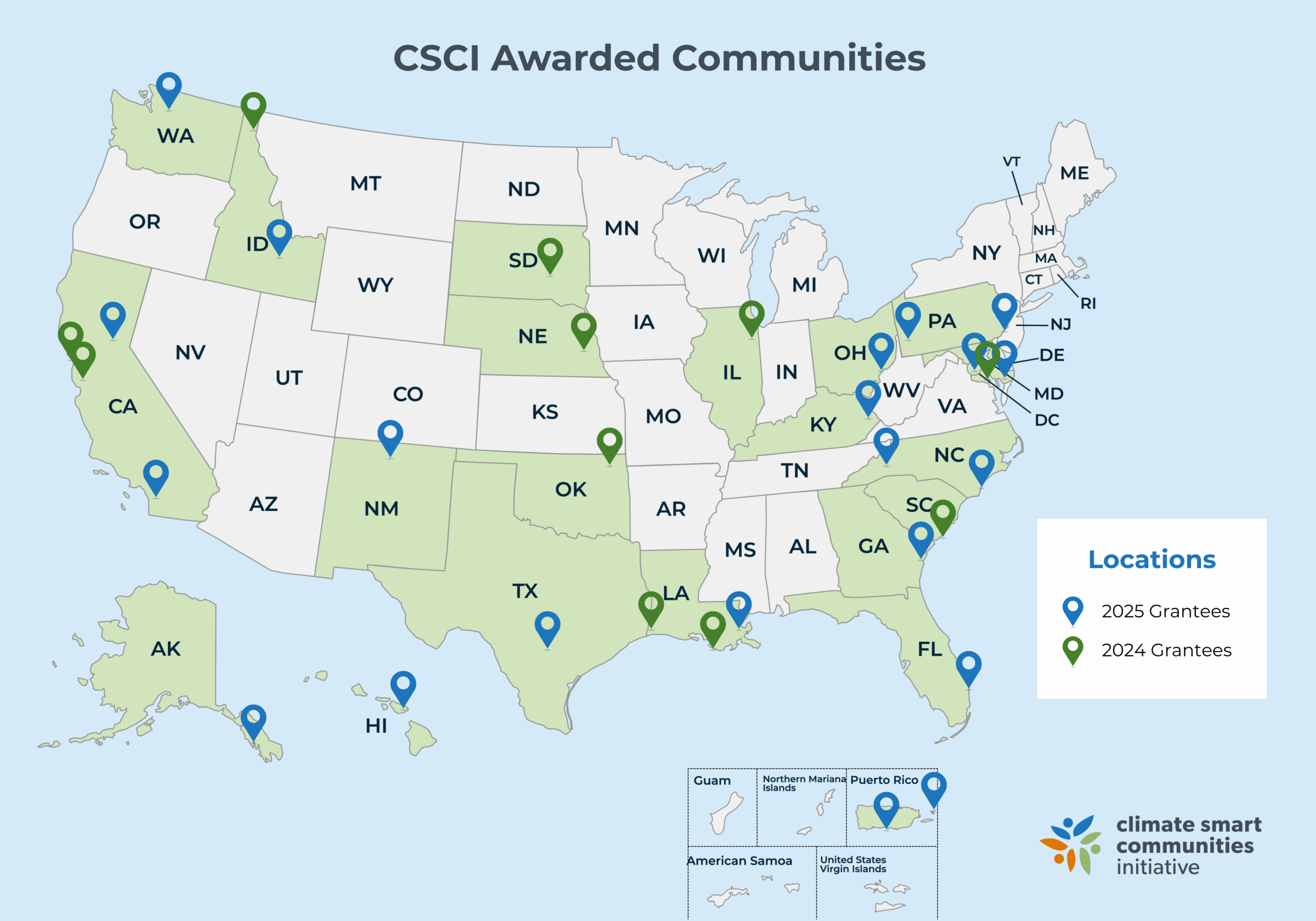
A complete list of current and previous-year grantees is provided below.
2025 Grantees 2024 Grantees2025 Grantees
Alaska | California | D.C./Maryland | Florida | Georgia | Hawaii | Idaho | Kentucky | Louisiana | Maryland | New Mexico | North Carolina | Ohio | Pennsylvania | Pennsylvania | Puerto Rico | Texas | Washington
Alaska: Keex Kwaan Climate Change Adaptation Plan
Award Amount: $93,500
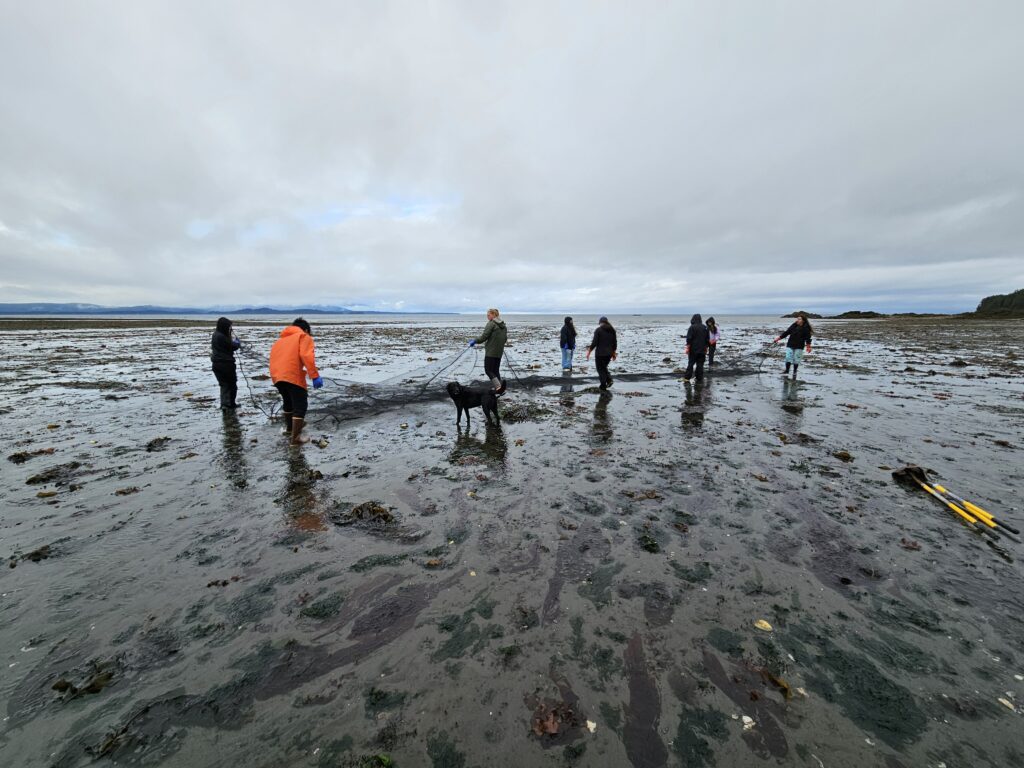
Southeast Alaska is experiencing increasing extreme weather events and new patterns as the climate changes, notably with periods of drought followed by intense rainfall. Residents in the Keex Kwaan Community Use Area, which surrounds the community of Kake on Kupreanof Island, are especially vulnerable, as this majority Alaska Native community is geographically isolated and historically underserved. This grant will make it possible for the project team to develop a comprehensive climate adaptation plan for Keex Kwaan that emphasizes outreach, education, and food sovereignty. The project team includes the Organized Village of Kake Tribe; community development organization Spruce Root; and climate adaptation practitioner Figus Consulting Services, LLC. Contact: Elizabeth Figus, Owner, Figus Consulting Services, LLC.
California: Piloting Floodplain Restoration with the Achaemen and Tongva Nations
Award Amount: $130,000
The Indigenous and low-income communities of Orange County, California disproportionately bear the burden of escalating climate impacts, which include rising temperatures and extreme heat events, and increased risk of drought and flood. With this grant, the Juaneño Band of Mission Indians, Acjachemen Nation – Belardes, the Juaneño Band of Mission Indians, Acjachemen Nation – 84A, and the Gabrieleno/Tongva San Gabriel Band of Mission Indians will work together with Orange County Environmental Justice Education Fund (OCEJEF), Friends of Puvungna, and American Rivers, to design a pilot floodplain restoration project that promotes collaborative stewardship, engages local residents, and identifies solutions that can be applied throughout the region. Contact: Patricia Flores, Associate Director, American Rivers.
California: Reducing Wildfire Risk in Nevada County with Community Crews and Nature-based Solutions

Award Amount: $100,000
The residents of Nevada County are well aware of the impacts of a changing climate, including the increased risk of wildfire. California Heritage Indigenous Research Project (CHIRP), the non-profit guided by the Nisenan, the indigenous people of the region, will partner with Sierra Streams Institute to craft an approach to wildfire mitigation grounded in Traditional Ecological Knowledge and nature-based solutions. The project team will initiate a crucial workforce development pilot in the form of a new nonprofit called Greensleeves: a rewilding project, which will recruit and train restoration crews from the local population. This project will serve as a model for building the restoration economy locally and regionally, as crews will be trained to deploy and implement wildfire mitigation treatments for various organizations. These treatments will include controlled burns; hand-thinning and piling; invasive species removal; and native herbaceous layer restoration, all in pursuit of a return to overall forest health. Contact: Helen Fitanides, Science Director, Sierra Streams Institute.
District of Columbia / Maryland: Managing Extreme Flood Risk with Green Infrastructure in the Watts Branch Watershed
Award Amount: $115,036
More intense rain events have significantly impacted residents and businesses of the Watts Branch Watershed, which spans a portion of Ward 7 in Washington, D.C. and Prince George’s County, Maryland. This grant will enable the project team to expand on the efforts of the Blue Green Infrastructure Community Engagement and Planning (BGI) study, a partnership between various DC and Prince George’s County government agencies that enables the implementation of nature-based climate resilience efforts. The project team, consisting of ICF, Straughan Environmental, and CHPlanning, will work with the community to help design a flood mitigation strategy within the Capitol Heights area of the watershed. Contact: Amanda Vargo, Managing Consultant – Climate Resilience, ICF.
Florida: Resilient by Design – Boynton Beach’s Community-Driven Heat Strategy
Award Amount: $100,000
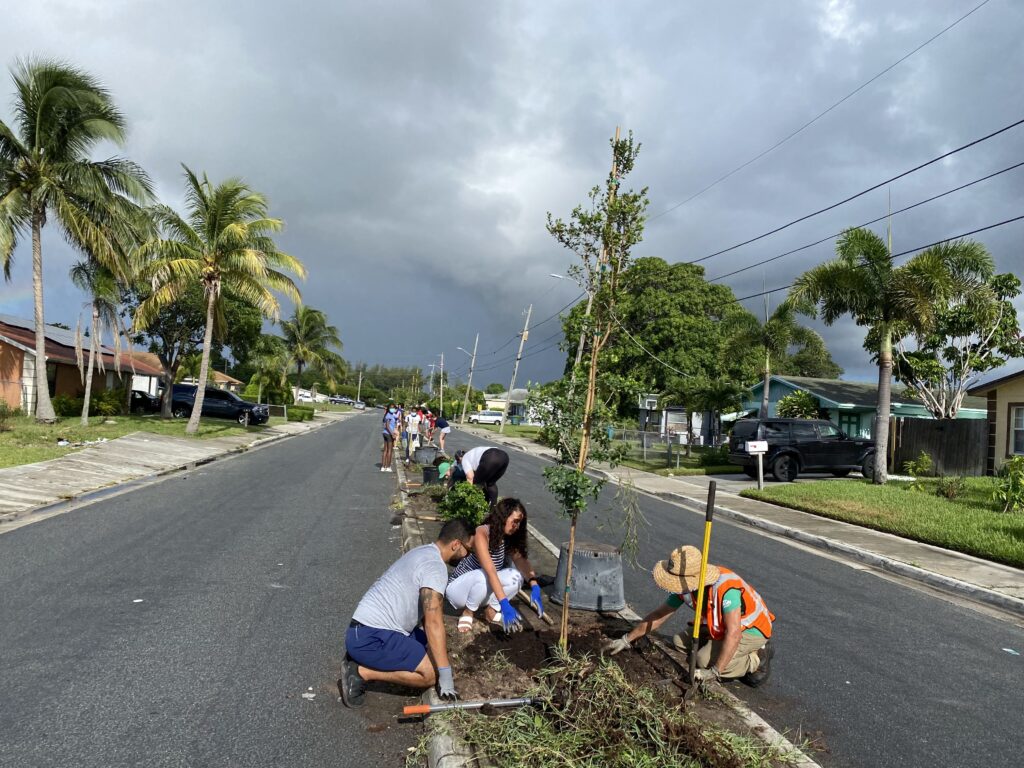
As extreme heat intensifies in South Florida, communities in Boynton Beach face growing health risks from rising temperatures and limited access to shade and cooling resources. The award will aid the City of Boynton Beach in the development of a community-driven urban heat resilience strategy in partnership with ICLEI – Local Governments for Sustainability USA, Community Greening, EcoAdapt, and American Forests. The project will bring together data analysis and local voices to identify and prioritize equitable cooling solutions. A pilot tree distribution program will prioritize residents in low-canopy neighborhoods. The resilience strategy will guide future planning and policy for a cooler, healthier Boynton Beach. Contact: Jess Grannis, Director of Programs, ICLEI – Local Governments for Sustainability USA (ICLEI USA).
Georgia: Collaboratively Developing a “Resilience Roadmap” for Chatham County
Award Amount: $110,787
With its coastal location, Chatham County is especially vulnerable to climate-related impacts. Rising sea levels and groundwater tables, stronger storms, and increased flooding now pose significant threats to the area’s natural and built environments. And neighborhoods such as Montgomery, Pin Point, Sandfly, and other small communities along the Ogeechee River are at high risk due to a combination of geographic exposure, economic challenges, and historic underinvestment. With this grant, Resilient Cities Catalyst (RCC) will work with representatives from the community, the Georgia Conservancy, and the Chatham County government to develop a “Resilience Roadmap.” This roadmap will articulate a clear vision for the county’s climate resilience efforts, and provide a common set of goals and priorities to guide county staff, elected officials, and community partners alike. Contact: Paul Nelson, Founding Principal, Resilient Cities Catalyst.
Hawaii: Addressing Wildfire Risk in the Islands of Maui County
Award Amount: $100,000
Maui County consists of the Hawaiian islands of Maui, Lana’i, Moloka’i, Kaho’olawe, and Molokini. Rising temperatures, longer droughts, and extreme wind events have combined with the spread of invasive grasses to make these islands increasingly vulnerable to wildfires. In 2023, the Lahaina wildfire drew global attention to this vulnerability and the destruction that can result. Over the coming year, the project team, consisting of issue experts from Headwaters Economics working alongside the Hawaii Wildfire Management Organization and local officials from Maui County, will engage local stakeholders, including and especially the most vulnerable populations, in a comprehensive review of wildfire risk and suggest improvements to local plans and policies. Contact: Patty Hernandez, Executive Director, Headwaters Economics
Idaho: Advancing Progress on Climate Resilience Priorities in Blaine County
Award Amount: $99,000
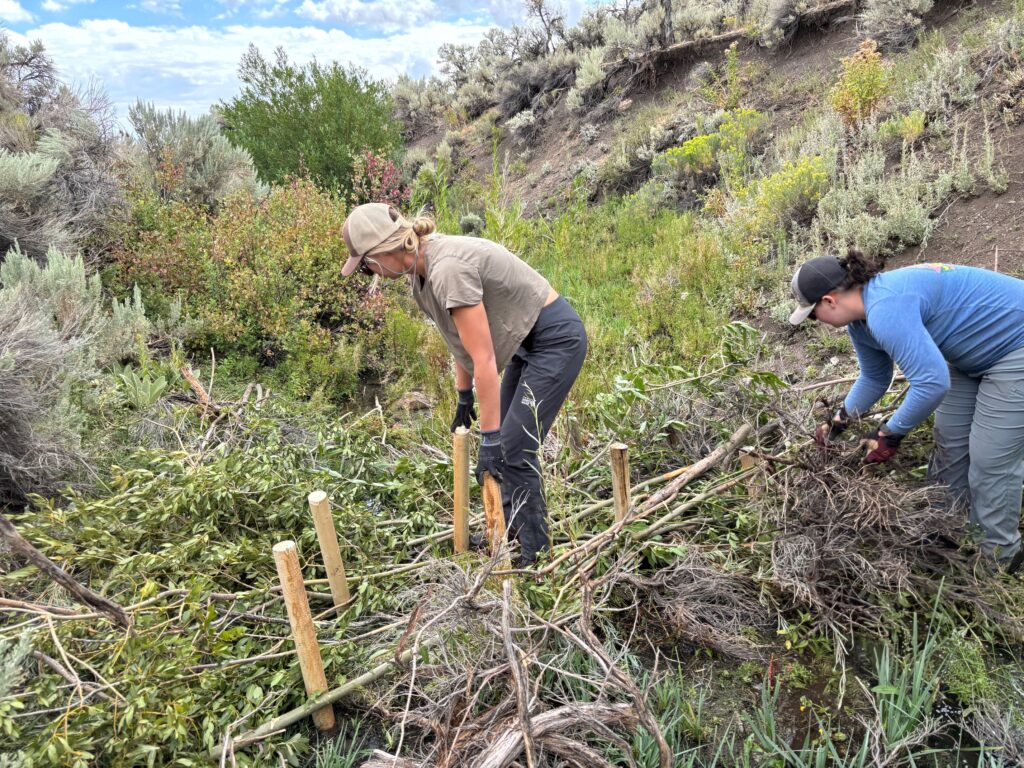
Blaine County faces several vulnerabilities related to climate change, including elevated wildfire risk, increased water scarcity, and extreme weather events. Those who work in the county’s agriculture, construction, hospitality, and recreation industries can be especially vulnerable. With this award, adaptation practitioners at The Keystone Concept will collaborate with the Wood River Land Trust and the Blaine County Government to engage community stakeholders in the implementation of previously identified priorities, including nature-based solutions such as planting shade trees, improving forest management, and restoring riparian areas. Through these efforts, the partners aim to reduce risks and increase preparedness. Contact: Lance Davisson, Owner and Principal Consultant, The Keystone Concept.
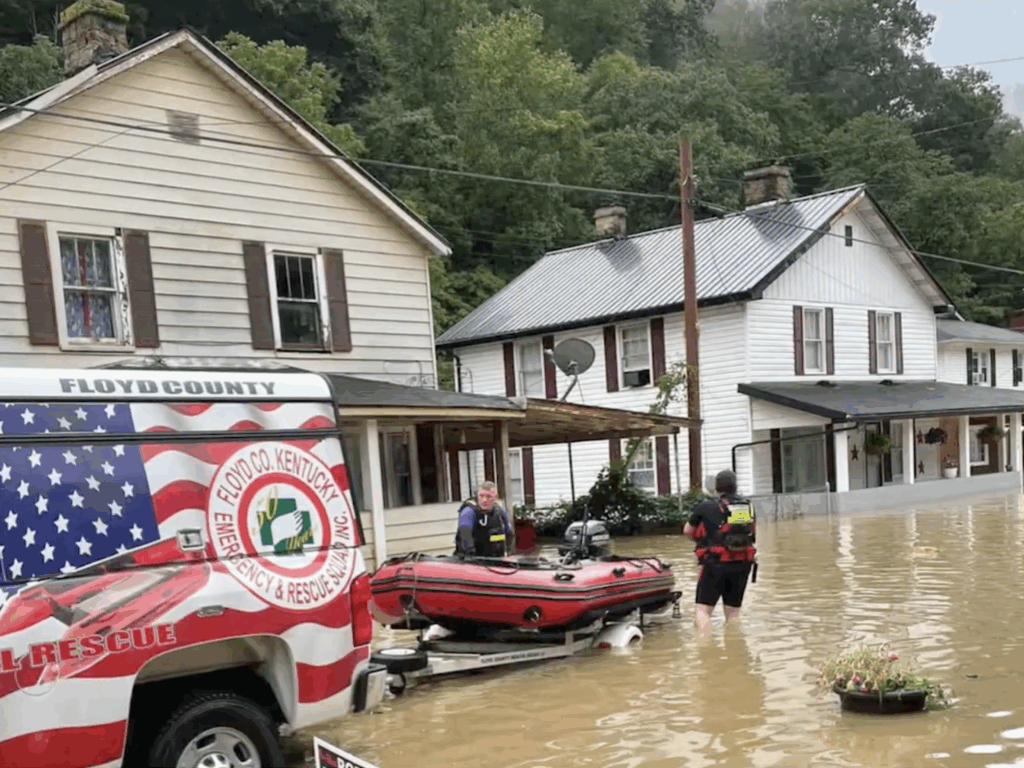
Kentucky: Helping Coal Country Communities Cope with an Increased Risk of Flooding
Award Amount: $100,000
Floyd County has more historic coal camps than any other county in Appalachian Kentucky, reflecting a rich cultural history as well as decades of economic challenges. The county also faces climate-related challenges, with intense storms bringing increased flooding. To address these challenges, members of the community are coming together in pursuit of strategies to foster economic recovery and increase climate resilience. With this grant, Floyd County KY BRECC (Building Resilient Economies in Coal Communities), working alongside the Floyd County Fiscal Court and the Central Appalachian Network’s Community Resilience Working Group, will undertake a flood mitigation assessment, consider the creation of a community resilience hub, and develop a “Higher Ground Housing Strategy,” which will include research on how best to help homeowners. Contact: Emily Carlson, Network Coordinator, Central Appalachian Network.
Louisiana: Building Climate Resilience Through Green Infrastructure in New Orleans East
Award Amount: $100,000
New Orleans East is experiencing rising temperatures and intensifying urban heat island effects that strain infrastructure and threaten public health. In response, the New Orleans East Green Infrastructure Collective (NOEGIC), EcoAdapt, Water Wise Gulf South, and the New Orleans Department of Parks and Parkways are partnering to undertake a climate vulnerability and risk assessment process and initiate the implementation of a targeted green infrastructure initiative. The grant will allow NOEGIC and partners to identify areas most affected by extreme heat, engage residents through workshops and strategy sessions, and expand the community’s urban tree canopy. Together, these efforts will build long-term resilience and support a healthier, greener New Orleans East. Contact: Kathryn Braddock, Lead Scientist, EcoAdapt.
Maryland: Collaborating with Communities of Faith to Advance Climate Resilience

Award Amount: $100,000
This grant will enable the project team to collaborate with faith-based communities in the city of Salisbury to pursue a range of climate resilience solutions, including the establishment of resilience hubs and the implementation of stormwater mitigation efforts, food sovereignty initiatives, and workforce development programs. These solutions had been identified during listening and planning sessions, where community members discussed the climate impacts affecting their neighborhoods and emphasized the disruption to daily life that has come with the flooding resulting from rising sea-levels. The project team will include adaptation experts from Creation Justice Ministries, working alongside local leaders from Interfaith Power & Light (DC.MD.NOVA), and government officials from Wicomico County. Contact: Avery Lamb, Executive Director, Creation Justice Ministries.
New Mexico: Planning for Climate Resilience in the Lower Rio Chama Watershed
Award Amount: $99,795
During the summer of 2024, intense rain triggered catastrophic flooding and significant sediment accumulation in the Rio Chama basin, damaging homes and fields, as well as acequias, which are traditional, community-managed irrigation ditches. With the increasing temperatures and altered precipitation patterns expected with climate change, more intense storms and periods of prolonged drought will continue to compromise water supply and local agricultural practices. In response, the Rio Chama Acequia Association will use this grant to work with member acequias, the New Mexico Acequia Association, American Rivers, and the South Central Climate Adaptation Science Center to develop a community-led watershed resilience plan focused on mitigating the impacts of drought, flooding, and erosion. The plan will build on local knowledge to assess climate risks and identify adaptive strategies for building resilience. Contact: Stephanie Mladinich, Climate Adaptation Specialist, South Central Climate Adaptation Science Center.
North Carolina: Navassa to Launch Nature-Based Climate Resilience Project with Regional Impact
Award Amount: $115,160
Climate change and development pressures threaten the cultural heritage and safety of Navassa, a coastal town facing increasing risks from flooding, sea level rise, and extreme heat. A grant will support the town and its partners in launching “EcoProtect,” a community-driven project to assess, prioritize, and advance nature-based solutions (NbS) to increase resilience to these threats. Building on the Navassa Resilience Strategy, this initiative will align vulnerable locations and assets with effective NbS to protect public health, the local economy, and critical natural and cultural resources. Through community engagement, technical analysis, and site-based dialogue, the project will co-develop ten implementable NbS strategies and foster public understanding of local climate risks. By employing a collaborative approach, this project aims to serve as a model for climate resilience efforts along the Gullah Geechee Cultural Heritage Corridor. Contact: Charlie Foster, Coastal Program Manager, BSC Group, Inc.
North Carolina: Building Back Stronger by Advancing Community-Led Resilience in Swannanoa and Woodfin

Award Amount: $130,000
Hurricane Helene brought devastating impacts to the small communities of Swannanoa and Woodfin, exposing long-standing vulnerabilities and disrupting lives. A grant of $130,000 will enable Fernleaf to facilitate an array of partners, including the Swannanoa Grassroots Alliance, the Town of Woodfin, the Land of Sky Regional Council, the Swannanoa Resilience Coordination Hub, RiverLink, Equinox, Appalachian Voices, Warren Wilson College, Thrive Asheville, and MountainTrue, to advance community-driven climate resilience and recovery planning. Through hazard assessments, inclusive engagement, and targeted training, the project will co-develop actionable, fundable strategies to reduce risk and strengthen long-term resilience. By centering community voices and local priorities, this initiative will serve as a model for climate resilience and recovery, demonstrating how place-based solutions can guide future adaptation across the region. Contact: Matt Hutchins, CEO & Senior Resilience Specialist, Fernleaf.
Ohio: Studying the Increased Risk of Flood, Erosion, and Sedimentation in Athens County

Award Amount: $101,753
The Athens County Hazard Mitigation Plan identified flooding as the most significant natural hazard facing the community. With a changing climate, the frequency and intensity of extreme weather events is expected to increase the number of intense downpours that can lead to flooding. Under this grant, Athens County and Rural Action, along with adaptation practitioners from BSC Group, will collaborate with local stakeholders to develop flood impact mapping from a combination of community observations and computational watershed modeling. Together this will improve their shared understanding of the risk from flood, erosion, and sedimentation, an essential step in the county’s pursuit of climate resilience. Contact: Ryan Gilliom, Conservation Project Specialist, Rural Action.
Pennsylvania: Rain Reclaim: Vacant Lots to Green Stormwater Infrastructure in Pittsburgh

Award Amount: $99,976
Pittsburgh residents are experiencing chronic adverse impacts from flooding and sewage overflows, which have disproportionately affected low-income neighborhoods. To address this, the WaterNow Alliance, the City of Pittsburgh, and Pittsburgh Water have partnered to establish the Rain Reclaim: Vacant Lots to Green Stormwater Infrastructure project, which will repurpose city-owned vacant lots into long-term green stormwater infrastructure (GSI). This work aims to reduce urban flooding, improve water quality, and provide multiple community benefits. The project will pilot the selection and technical design of 1-2 vacant lot sites in the City’s Negley Run watershed, conduct a cost-benefit analysis, and analyze financing options to lay the foundation for a scalable, long-term GSI effort. Contact: Amy Weinfurter, Director of Strategic Projects, WaterNow Alliance.
Pennsylvania: Exploring Innovative Flood Insurance to Support Eastwick Residents in Philadelphia
Award Amount: $97,825
The low-lying Eastwick neighborhood in Southwest Philadelphia has experienced repeated floods, and climate change threatens to increase the frequency and intensity of these events. Residents struggle to find appropriate and affordable flood insurance protection, leaving them vulnerable to financial hardships after floods. In response, Insurance for Good, the City of Philadelphia Office of Sustainability, and Eastwick United CDC are partnering to assess the feasibility of new and innovative insurance products for residents. The partners will survey and speak with residents about their flood insurance needs; engage with regulators; and work with private-sector companies to identify solutions. Additionally, the partners will develop a menu of funding options for voluntary property buyouts to provide more equitable and affordable flood recovery options for residents. Contact: Carolyn Kousky, Executive Director and Founder, Insurance for Good.
Puerto Rico: Raíces Playeras – Comunidad y Preparación (Coastal Roots – Community and Preparedness in Barrio Playa)

Award Amount: $100,000
Through this grant, Un Nuevo Amanecer (UNA), the Autonomous Municipality of Ponce, and climate resilience experts from the Climigration Network will work hand-in-hand with residents of Barrio Playa to address the rising threats of extreme heat, stronger storms, and more frequent flooding. Barrio Playa is a low-lying coastal area in Ponce. The area is home to many low-income families, including those living in informal settlements, making the area especially vulnerable to climate impacts. This project will feature a collaborative, community-driven effort that will result in a practical and inclusive climate resilience plan that reflects the lived realities of Playa’s residents. The project will include a robust public engagement campaign, expanded local training programs, the implementation of nature-based solutions, and the development of effective emergency response and evacuation strategies — all guided by the voices and leadership of the community itself. Contact: Kristin Marcell, Director Climigration Network or David Southgate, Board Member and Advisor, Un Nuevo Amanecer, Inc.
Puerto Rico: Growing Native Plants to Help Protect the Island of Culebra
Award Amount: $99,945
Culebra, a small island community located 17 miles east of Puerto Rico’s main island, faces significant climate change-related challenges. Rising global temperatures have contributed to an increase in the frequency and intensity of tropical storms, while rising sea levels and expanded coastal erosion threaten to damage the island’s environment and economy. With this grant, the adaptation experts at Coastal Quest will work with the community-based organization Protectores de Cuencas (PDC) and the Culebra municipal government to take one of the essential steps identified in a prior planning process, the creation of a plant nursery with the capacity to grow the native trees and vetiver grasses that are needed for the restoration of coastal ecosystems. Contact: Mary Ann King, Coastal Ecosystem Project Manager, Coastal Quest.
Texas: Addressing Extreme Heat in San Antonio

Award Amount: $96,000
With support from this grant, Adaptation International, Fuerza Unida, and the City of San Antonio’s Office of Sustainability will deepen their collaboration to reduce climate risks—particularly for the elderly and low-income residents of the city’s South San neighborhood who are especially vulnerable to heat, flooding, and poor air quality. The team will build local capacity by launching a Neighborhood Cooling Committee and training youth to plant native, drought-tolerant trees that provide shade and improve environmental health. The effort will combine education, workforce development, and nature-based solutions to advance long-term, community-driven climate resilience. Contact: Celine Rendon, Climate Resilience Specialist, Adaptation International.
Washington: Protecting the Lands and Livelihoods of the Sauk-Suiattle Indian Tribe
Award Amount: $100,000
Climate change threatens the ancestral lands, cultural traditions, and livelihoods of the Sauk-Suiattle Indian Tribe (SSIT). Rising temperatures are melting glaciers, lowering the water quality of local rivers and raising the risk of flooding. These combined impacts are shifting habitats of culturally significant species, including species and natural resources that provide food security. With this grant, the Tribe and its partners, including the community-based Conservation Biology Institute and the adaptation practitioner PICEA Consulting Group, will conduct a comprehensive climate vulnerability assessment and develop a climate resilience plan that integrates traditional ecological knowledge, incorporates nature-based solutions, and guides future adaptation efforts. Contact: Chas Jones, Principal Scientist and CEO, PICEA Consulting Group.
2024 Grantees

An award of $50,707 will allow local officials, community organizations, and residents in this small town near the nation’s capital to work with experts from the University of Maryland Environmental Finance Center to advance priority projects from their Climate Action Plan. The town is increasingly susceptible to flooding, and the project team will involve the community through diverse engagement strategies to build climate resilience through community education and empowerment, green infrastructure, and landscapes designed to accommodate the impacts of a changing climate. Contact: Stephanie Dalke, Program Manager, University of Maryland Environmental Finance Center.
View the Project SpotlightStronger storms, rising sea levels, and associated flooding are widespread concerns for the communities of Charleston County, South Carolina. A grant of $121,821 will enable county officials and the local community-based organization, Lowcountry Alliance for Model Communities (LAMC), to work with practitioners from Fernleaf and Adaapta to develop two fundable strategies: 1) scaling up and sustaining flood mitigation investments and 2) catalyzing community-driven and climate-resilient brownfields redevelopment. Through these parallel efforts, the team will be paying particular attention to the neighborhoods disproportionately burdened by environmental contamination and the unique vulnerabilities of historic African American communities and low-income households in the region. Updated Contact: Stephen Julka, Resilience Planner, Fernleaf
View the Project SpotlightAn award of $115,516 will enable collaboration in resilience planning across five municipalities in Cook County. This support will allow the City of Markham and the Villages of Bellwood, Franklin Park, Justice and Lynwood to work with experts from ICF, Geosyntec and Metro Strategies to evaluate how resilience measures such as green infrastructure can reduce runoff and heat island effects and exchange that information as part of an ongoing collaboration. The five municipalities are currently developing community-driven resilience plans to address flooding, extreme heat and other climate impacts. Cook County’s Department of Environment and Sustainability allocated American Rescue Plan Act (ARPA) funds for planning and implementation in recognition that these communities, selected for participation in the program after a competitive application and interview process, have already faced environmental injustices and generations of disinvestment. Contact: Adam Parris, Senior Consultant, Climate Planning + ICF Climate Center Senior Fellow, ICF.
View the Project SpotlightUnder an award of $80,089, the Coushatta Tribe and the University of Oklahoma will be partnering to update the Tribe’s climate vulnerability assessment, solicit community input, and draft a corresponding climate resilience plan. The Coushatta people have called the piney woods of Southwest Louisiana home for more than a century, but now their lands are increasingly vulnerable to climate related impacts, including flash flooding, extreme heat, and wildfires. These impacts risk limiting culturally significant activities such as foraging, traditional cooking, powwows, and religious ceremonies that rely on intact and healthy natural areas. With this support, the Tribe can develop a plan that reflects and addresses community concerns, while building collaboration with surrounding parishes. This project will follow all Tribal protocols, including the first step of Tribal Council review and adoption of a formal resolution. Contact: Sharon Hausam, Climate Adaptation Planner and Research Scientist, South Central Climate Adaptation Science Center at the University of Oklahoma
View the Project Spotlight
This redlined community in the Bay Area of California is facing challenges related to a changing climate, including sunny day flooding from rising seas, overland flooding from extreme precipitation events, and poor air quality from more frequent and intense wildfires. A $115,000 grant will enable the City of East Palo Alto, Climate Resilient Communities, and Coastal Quest to prioritize the voices of historically underrepresented residents through multilingual community workshops, surveys, and focus groups. The community concerns and priorities collaboratively identified through these activities will be the foundation for the City’s new Environmental Justice Element and updated Safety Element of the city’s General Plan–a guiding policy vision for the next 8+ years of climate resilience and environmental, social, and racial justice. Contact: Emma Koeze, Project Manager, Coastal Quest.
View the Project SpotlightThe families that live in mobile and manufactured homes on the southwest side of this small city in eastern Nebraska are especially at risk with a changing climate. Increasingly intense storms and ice jams are causing flash floods that put lives and livelihoods at risk. Thanks to a grant of $114,978, community leaders from the City of Fremont and the Fremont Area United Way will be able to work with the experts from Headwaters Economics to augment their existing plans, and identify feasible solutions for these neighborhoods, exploring options for improved gray and green infrastructure. Contact: Nate Kommers, Communications Director, Headwaters Economics.
View the Project SpotlightThe Grand Cailou/Dulac Band of the Biloxi-Chitimacha-Choctaw, who have been living along the Louisiana Gulf Coast for centuries, now face a number of climate related challenges, including severe storms, intense flooding, sea level rise, saltwater intrusion, and land erosion, losing by some estimates the equivalent of a football field every 100 minutes. Support in the amount of $122,000 will allow the tribe to develop a community resilience plan that combines the lived experience of local residents and the traditional ecological knowledge of the tribe with the planning expertise of Climigration Network. The plan will define specific climate resilience goals, enable community participation in proposed approaches, and identify additional resources for further implementation. Contact: Devon Parfait, Tribal Chief of the Grand Caillou/Dulac Band of the Biloxi-Chitimacha-Choctaw Indians of Louisiana
View the Project SpotlightThe droughts, floods, and wildfires that are becoming more frequent and more severe with a changing climate are threatening the Lower Brule Sioux Tribe’s way of life, including their ceremonial and spiritual practices. These climate related concerns are especially stressful in the context of the area’s high poverty and high unemployment, as more than 30% of the local population lives below the federal poverty level and nearly 20% of the local workforce is jobless. With support in the amount of $121,400, the Lower Brule will work alongside the Great Plains Tribal Water Alliance and the North Central Climate Adaptation Science Center at Colorado University to develop a climate adaptation plan that is rooted in the Tribe’s principles of respect, inclusivity, and collaboration. Contact: Kynser Wahwahsuck, Tribal Climate Resilience Liaison, Great Plains Tribal Water Alliance
Representatives from the county, the city of Miami, Oklahoma, the Inter-Tribal Council of Northeast Oklahoma and L.E.A.D. Agency, Inc, will collaborate with Fernleaf under a $119,000 award. This support will allow the partners to engage the local community, conduct a vulnerability analysis, and develop a corresponding climate resilience plan. This area in Northeast Oklahoma already was ranked “very high” on the CDC’s Social Vulnerability Index (SVI), and is now experiencing additional pain from climate related impacts, including severe storms and toxic flooding, as well as extended drought and extreme heat. The plan will identify a path forward, with a focus on building the capacity and securing the funding needed for success. Contact: Matt Hutchins, CEO, Fernleaf.
View the Project Spotlight
Sitting on the shores of Idaho’s largest lake, the community of Sandpoint is already feeling the impacts of climate change. More frequent and more intense extreme weather events and temperature fluctuations threaten the forest, lakes, and streams that underpin the town’s world-class recreation industry and natural resource-based economy. Support in the amount of $122,629 to the Model Forest Policy Program (MFPP) will enable local officials,community groups, and vulnerable populations to work with MFPP to develop a climate resilience plan that delivers effective, durable, and fundable strategies. Contact: Gwen Griffith, Program Director, Model Forest Policy Program.
View the Project SpotlightThe Tree Canopy Pilot Project is a collaborative climate resilience effort led by Rise South City, Coastal Quest, and the City of South San Francisco that aims to provide frontline communities with access to climate resilience education and relief from urban heat through the implementation of part of the city’s Urban Forest Master Plan (2020). Thanks to this award of $95,000, trees will be planted to mitigate urban heat and combat air pollution, two major climate-related issues facing frontline communities across South San Francisco. The community engagement and education portion of this project will bridge the gap between frontline communities and the city to facilitate tree planting where it is most needed. Contact: Emma Koeze, Project Manager, Coastal Quest.
View the Project Spotlight