
Tracking the Growing Demand for Climate Resilience: A CSCI Impact Overview
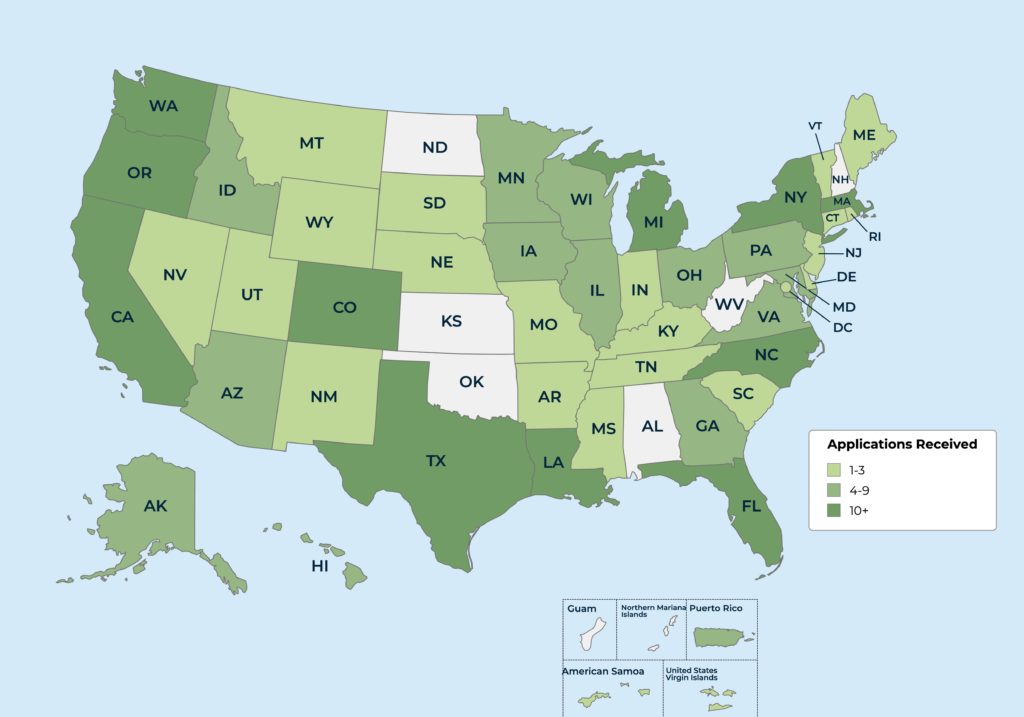
Since its inception in 2024, over 400 communities across the U.S. have sought resources from the Climate Smart Communities Initiative (CSCI). Communities are demonstrating an overwhelming readiness to take charge of their climate futures. From creating community resilience hubs and restoring flood-prone shorelines to installing neighborhood stormwater solutions and expanding tree canopy, these efforts reflect a growing movement to safeguard vital infrastructure, protect vulnerable populations, and build local capacity.
The CSCI is designed to meet communities where they are, prioritizing those facing the most significant climate-related challenges while strengthening the nation’s overall capacity for adaptation and resilience. Through its adaptable approach to investment and unique partnership model, CSCI works to connect these communities with catalytic funding and the broader ecosystem of support needed to build local and regional capacity for lasting climate resilience.
Three Years in Review: What the Data is Telling Us
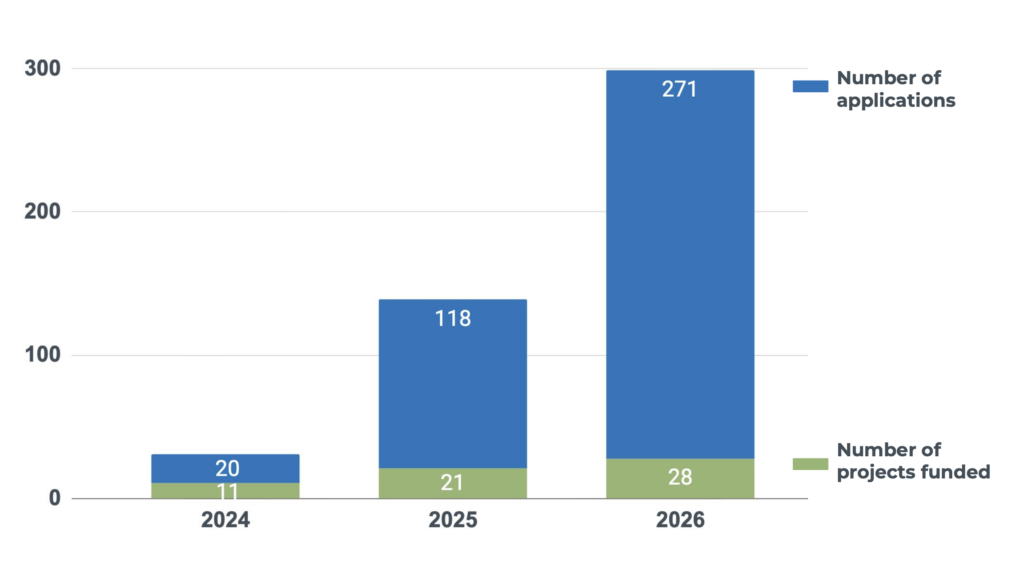
Over the last three years, CSCI has enjoyed a front row seat to the evolving challenges our grantee partners are facing when seeking the resources they need to build resilience to the impacts of climate change. The scale at which communities are seeking resources to do resilience work is reflected in the significant increase in the number of applications received between 2024 and 2026 (Figure 1). A staggering 1255% increase over three years.
Notably, while CSCI has seen exponential growth of our applicant communities, funding for adaptation has become more difficult to secure. Programmatic shifts and budget reductions at the federal level have dramatically impacted the research, data, tools, and technical expertise that communities rely on to make informed decisions.
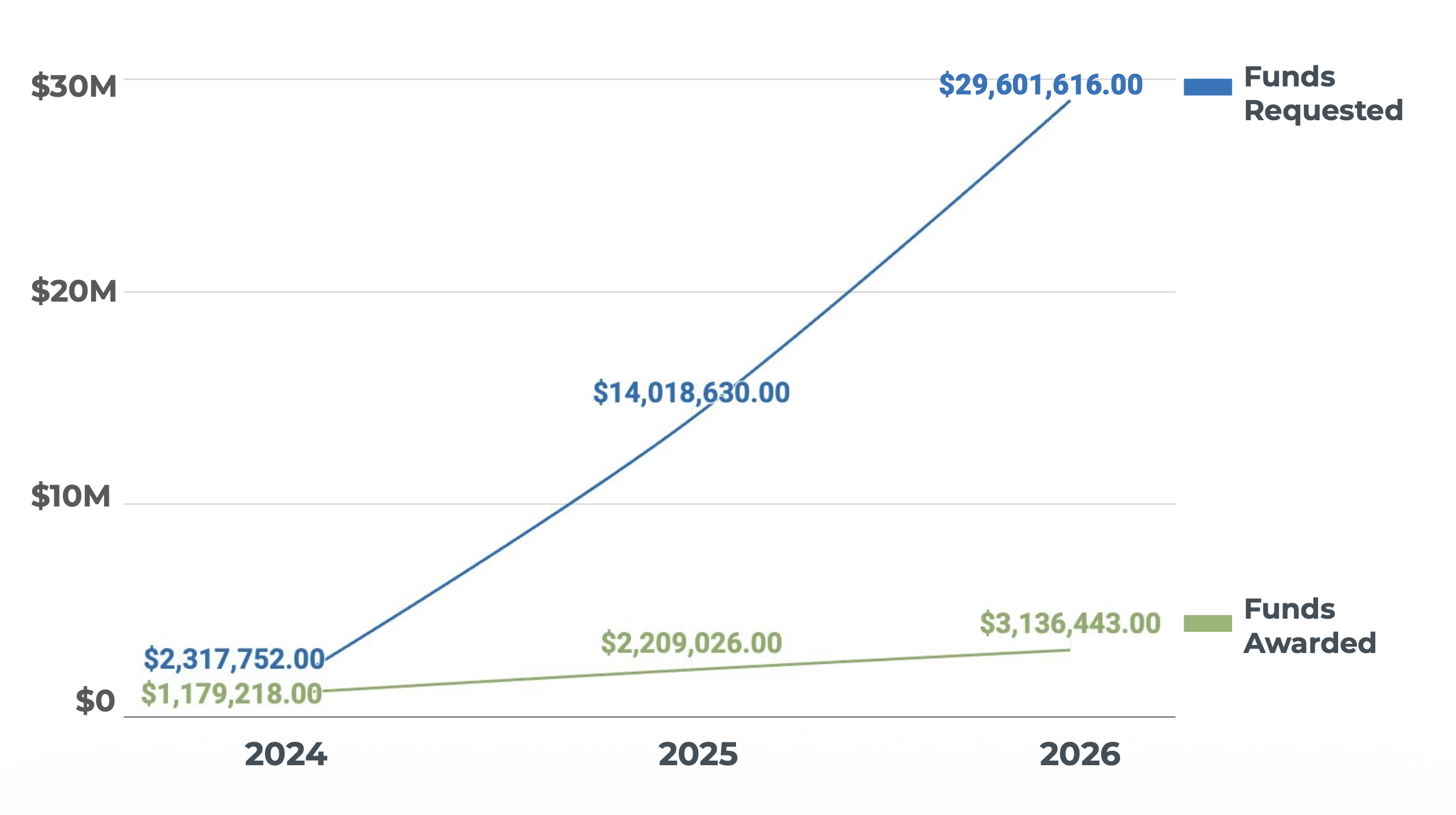
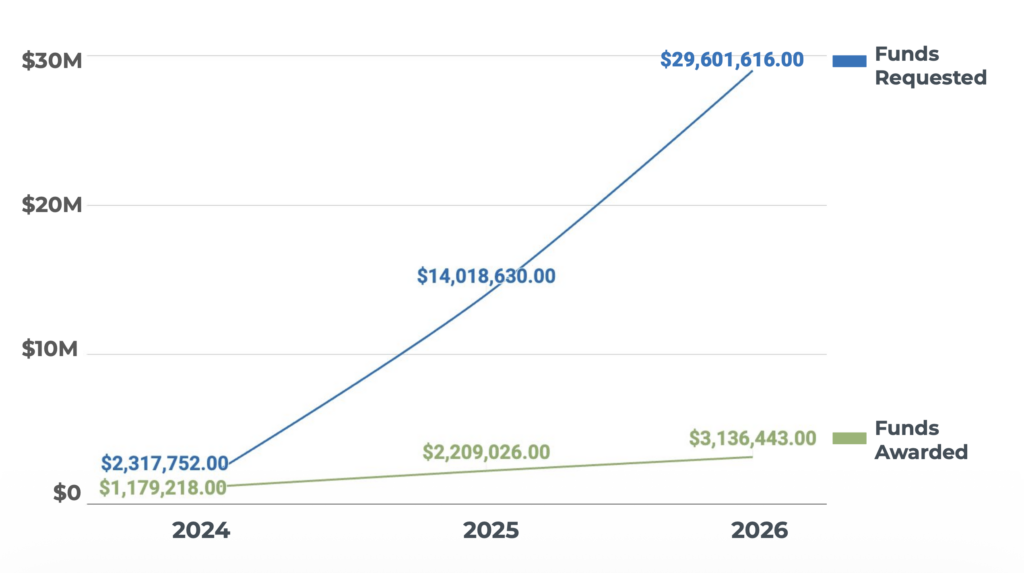
As we entered our third year of grantmaking, the growing gap between available funding resources and the need in communities exploded. CSCI has received over 400 applications from U.S. communities, totaling over $45 million in funding requests, competing for just $6.5 million in available funding. In the last year alone, the amount of requested funds more than doubled, increasing from $14 million to nearly $30 million. At the same time, funding available through CSCI only increased by around $1 million year-over-year.
CSCI’s open application and grantmaking across the U.S. offers additional insights into the kinds of investments communities need to make progress on their adaptation and resilience journeys. When reviewing across our prior applicant pools, most applications focused on planning and assessment activities, suggesting that many communities recognize that existing plans may no longer be sufficient as climate-related events become more frequent and severe.
Funding for resilient infrastructure projects, such as stormwater systems, cooling centers, and resilience hubs, has now become a top priority for applicants. Many communities also proposed nature-based solutions and robust community engagement strategies, obviously reflecting the core priorities of the CSCI program. Together, these trends highlight the need for investment at every stage of resilience building, from planning and assessment to project implementation, so that all communities can make meaningful and lasting progress.
Responding to the Demand: Opportunities for Investment
Philanthropy is critical for supporting community-based efforts to build resilience to many hazards, and yet, according to Climate Works’ 2025 Adaptation and Resilience Report, less than 10% of global climate funding is allocated towards adaptation and resilience priorities. Through its innovative structure, CSCI is positioned to become a powerful mechanism for adaptation and resilience investment across the United States ready to meet the demand we are seeing in communities nationwide.
In addition to providing critical funding through an annual open grantmaking process, CSCI provides peer learning opportunities, training, and technical support to help communities achieve lasting resilience. The initiative also leverages its comprehensive monitoring, evaluation, and innovation program to unearth trends in the adaptation field, identify gaps, and help us better understand what effective adaptation looks like. This has allowed us to better understand what hazards communities are responding to as we continue to see increases in the number of communities seeking to address extreme heat, flooding, air quality, hurricanes and tropical storms, drought, sea level rise, and wildfires.
CSCI partners are working to expand our grantmaking portfolio in order to respond to growing demand. Specifically, we are engaging partners in the hope that the program can expand to support specific regional or Tribal cohorts of projects as well as community-led efforts focused on specific challenges such as watershed resilience, wildfire resilience, and public health. CSCI can be a partner to any organization looking to further leverage their investments in adaptation and resilience – either at a local or regional scale or across specific hazard types. We welcome partners to join us in scaling resilience outcomes in communities across the US and its territories.
Help Support CSCI’s Work
- Share our upcoming funding announcement with partners who are seeking to fund innovative climate resilience projects.
- If you are a climate adaptation practitioner, apply to join the Registry of Adaptation Practitioners, which connects climate adaptation service providers with communities who need support with adaptation.
- Connect with Climate Resilience Fund staff (info@climateresiliencefund.org) to discuss how additional investments in CSCI can align with a diverse array of institutional grantmaking priorities.