Climate Smart Communities Initiative Invests $3.1 Million in Community-Led Climate Resilience Projects
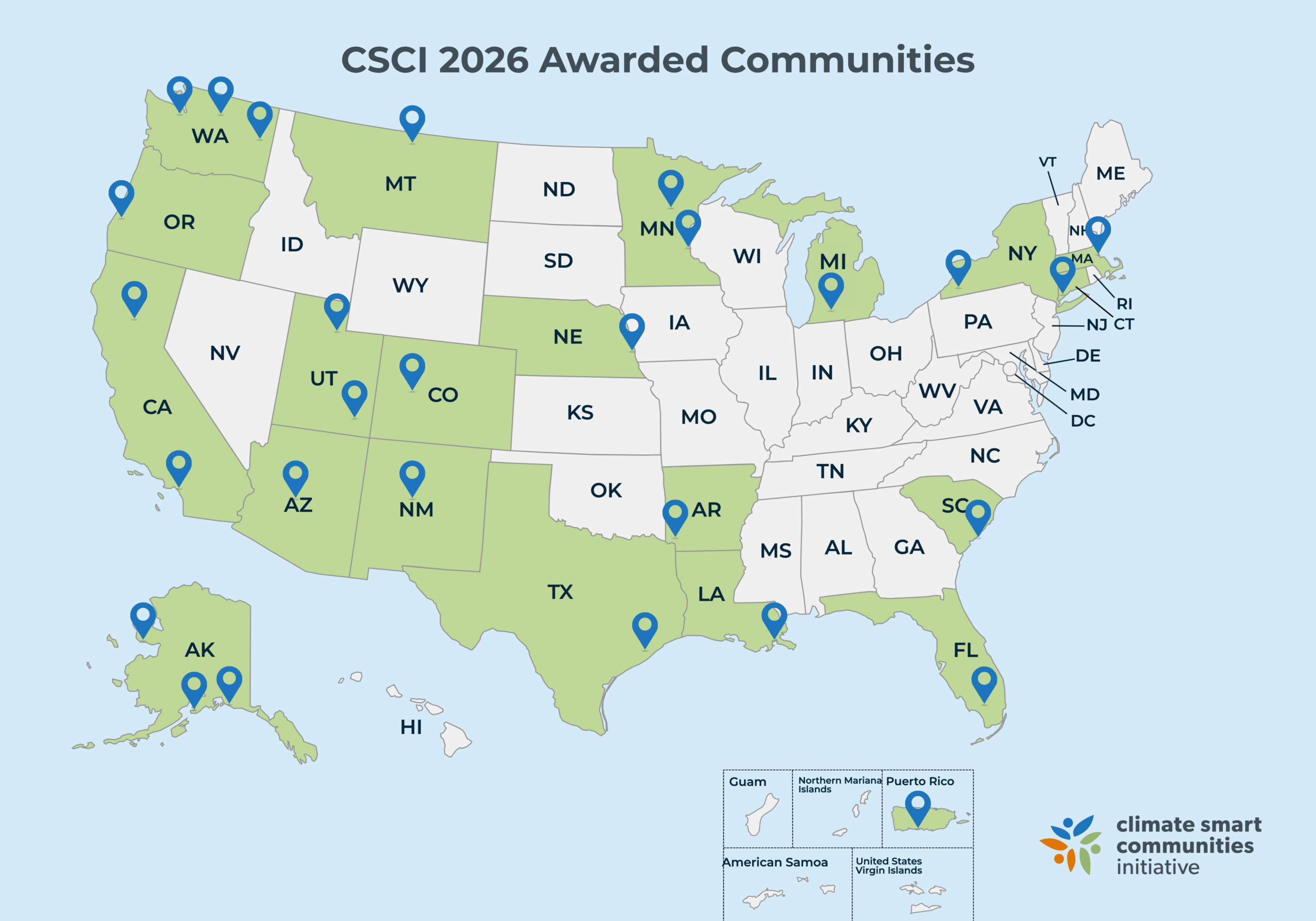
August 18, 2026 – The Climate Smart Communities Initiative (CSCI) is pleased to announce 28 new grant awards totaling over $3 million to help communities across the country prepare for extreme weather and the growing impacts of climate change. This is the third year of grant funding provided by CSCI to support a total of 60 climate resilience projects in local communities across the United States. The next funding opportunity will be announced in the Fall of 2026.
Each award supports a partnership between a local government, a community-based organization, and a climate adaptation practitioner, an approach that sets CSCI apart by pairing local leadership with technical expertise and dedicated support to advance each community’s climate resilience efforts. CSCI is more than a grants program, it is a system that is focused on building the capacity of local leaders to make progress on climate resilience by investing in communities where the need and exposure to climate risk are greatest, and at the same time contributing to a collective understanding of what works.
“We continue to be heartened by the leadership of communities and local governments working diligently to address climate impacts and build resilience through innovation and projects that support and improve people’s lives. There is ongoing demand for resources for this important work, and we are honored CSCI can help these projects come to fruition.” said Marissa Ramirez, Senior Director, Strategy, Planning & Operations; Environmental Equity and Justice Center at The Natural Resources Defense Council.
Designed to support communities facing significant climate risks with constrained capacity and resources, the program received a significant increase in applications submitted compared to last year. This year, CSCI received 271 applications from 44 U.S. states, plus Puerto Rico, American Samoa, and the U.S. Virgin Islands–a 128% increase from the previous year. The selected communities are addressing a wide range of climate challenges, from flooding and wildfire to shifts in habitats and ecosystems. By investing in cross-sector partnerships, CSCI helps communities not only tackle immediate risks, but also build the capacity needed locally to sustain their resilience work over time. CSCI aims to augment local leadership with free planning and implementation resources and nationally vetted climate adaptation experts, ultimately increasing the ability of local communities to address climate change effectively and autonomously.
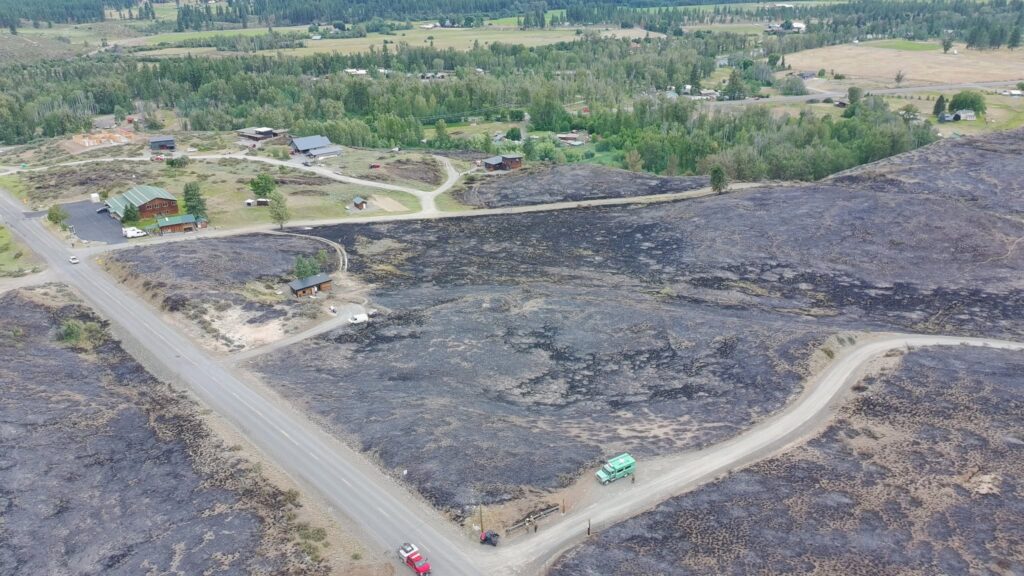
“What an honor to be awarded funds through the CSCI program! We’re eager to use this award to carry out the critical work of adapting to the alarming escalation of wildfire risk that accompanies climate change! The last weekend of this June brought a fast moving, wind driven fire to the doorstep of our community, highlighting the urgency behind our project. We aim to develop a collaborative governance model and Fire Resiliency Toolkit that address the particular challenges for small amenity-focused communities in the fire prone West. We’re excited for the ways this project will prepare our community for the future, and hope our model inspires similar communities.” said Rocklyn Culp, Town Planner for the Town of Winthrop Washington.
The urgency and potential impact like Winthrop’s underscore the importance of continuing to expand and sustain the CSCI program. It is encouraging to be able to increase the number of communities CSCI supports each year and it leaves us better poised to continue that trend.
“CSCI partners continue to work to leverage and grow the program’s reach and capacity. This year, we expanded our partnership with key federal partners. And, of course, our efforts to engage private and corporate supporters have already led to successful leverage from philanthropy. We’re optimistic that our ambitions for growing and sustaining the program will be realized as the impact of our investments and resources is recognized.” said John Nordgren, Managing Director of the Climate Resilience Fund, one of five partners in CSCI.
This year’s cohort of 28 projects is the largest number that CSCI has awarded through its annual competition process. $3.1 million in core funding for these projects, including over $2 million from NOAA, and nearly $1 million from a generous donation from the Walton Family Foundation together allowed CSCI to fund its highest number of projects to date.
“Local leaders are on the front lines of finding practical ways to protect water, restore nature, and help communities thrive. Through CSCI, the Walton Family Foundation is proud to support the people and ideas making that work possible.” said Amy Saltzman, Senior Program Manager, Walton Family Foundation.
The 2026 Awarded Communities
- Alaska, Bering Straits – A $114,928 grant will establish Pilgrim Hot Springs as a regional Community Resilience Hub, develop a Village Food Network, and knowledge sharing of nature-based streambank stabilization to bolster food security, combat coastal erosion, extreme storms, and shifting ecosystems. Project partners include Model Forest Policy Program, Kawerak, and the Native Villages of Teller, Mary’s Igloo, and Elim.
- Alaska, Cordova – A grant of $115,000 will support a comprehensive water demand analysis, the modeling of seasonal supply vulnerabilities, and the identification of nature-based and technological solutions to address declining snowpack and shifting hydrology. Project partners include Prince William Sound Science Center, City of Cordova, the Native Village of Eyak, and the Prince William Sound Economic Development District.
- Alaska, Native Tribes of Chugach and Lower Cook Inlet – A grant of $115,000 will support a vulnerability assessment and formation of a Tribal Climate Justice Commission to address shifting species and ecosystems, coastal hazards, and changing seasonal patterns that impact subsistence food security. Project partners include PICEA Consulting Group, the Chugach Regional Resources Commission, and the Native Village of Port Graham Tribal Council.
- Arizona, Sunnyslope, Phoenix – A $115,000 grant will assess the feasibility of a whole-of-community green district to address extreme heat, develop an implementation roadmap, and explore sustainable financing models for tree canopy expansion. Project partners include Resilient Cities Catalyst, the City of Phoenix Office of Heat Response and Mitigation, and Unlimited Potential.
- Arkansas, Fulton, McNab, Stamps, and Lewisville – A grant of $115,00 will enhance community watershed resilience through a community-endorsed flood resilience roadmap and regional peer exchange program. Project partners include the Environmental Equity Information Institute, Visibility Outreach Touch Engage South Arkansas (VOTE SOAR), community leaders in Fulton, McNab, Lewisville and Stamps, the University of Maryland Environmental Finance Center, and the Clinton School of Public Service.
- California, Mineral and Mill Creek – A $100,000 grant will support the development of an Implementation and Adaptation Plan to address wildfire and other climate-related impacts using a collaborative community-guided planning process. Project partners include Sierra Institute for Community and Environment, Mineral and Mill Creek Firewise, and Feather River Trout Unlimited.
- California, Santa Ana River Watershed – A grant of $115,000 will advance Indigenous-led climate resilience through the development of aquatic and terrestrial restoration that employs nature-based solutions and Indigenous Ecological Knowledge to address climate-related risks including drought, riverine flooding, and shifting ecosystems. Project partners include American Rivers, Friends of Puvungna, the Orange County Environmental Justice Education Fund, the Gabrieleño/Tongva San Gabriel Band of Mission Indians, the Juaneño Band of Mission Indians, Acjachemen Nation-84A, and the Juaneño Band of Mission Indians Acjachemen Nation – Belardes.
- Colorado, Town of Carbondale – A grant of $109,000 will support the development of the Carbondale Inclusive Resilience Utilities Plan to address drought, wildfire, and shifting snowpack impacts. Project partners include Headwaters Climate, the Town of Carbondale, and the Clean Energy Economy for the Region, Lukas Climate and Roaring Fork Engineering.
- Connecticut, West Side Bridgeport – A grant of $115,000 will support the refinement of community-driven resilience objectives and prioritize options for nature-based shoreline solutions for a 20-mile Waterfront Seawalk addressing air quality impairments, extreme heat, poor water quality, and rising sea levels. Project partners include Trust for Public Land, PT Partners, and the City of Bridgeport’s Office of Sustainability.
- Florida, Miccosukee Tribal Lands – A $114,600 grant will support the development of toolkits and workshops that weave Traditional Knowledge with Western science to empower families and villages to address extreme heat and flooding. Project partners include The Miccosukee Tribe of Indians of Florida, Adaptation International, Love The Everglades Movement, and Just Collective.
- Louisiana, New Orleans’ 17th Ward (Gert Town, Hollygrove, and Hollygrove-Dixon neighborhoods) – A $98,500 grant will fund climate research, community forums, and surveys into a community-informed adaptation roadmap that prioritizes nature-based solutions to address flooding, extreme heat, and severe storms. Project partners include EcoAdapt, the City of New Orleans Office of Resilience and Sustainability, and the Hollygrove-Dixon Neighborhood Association.
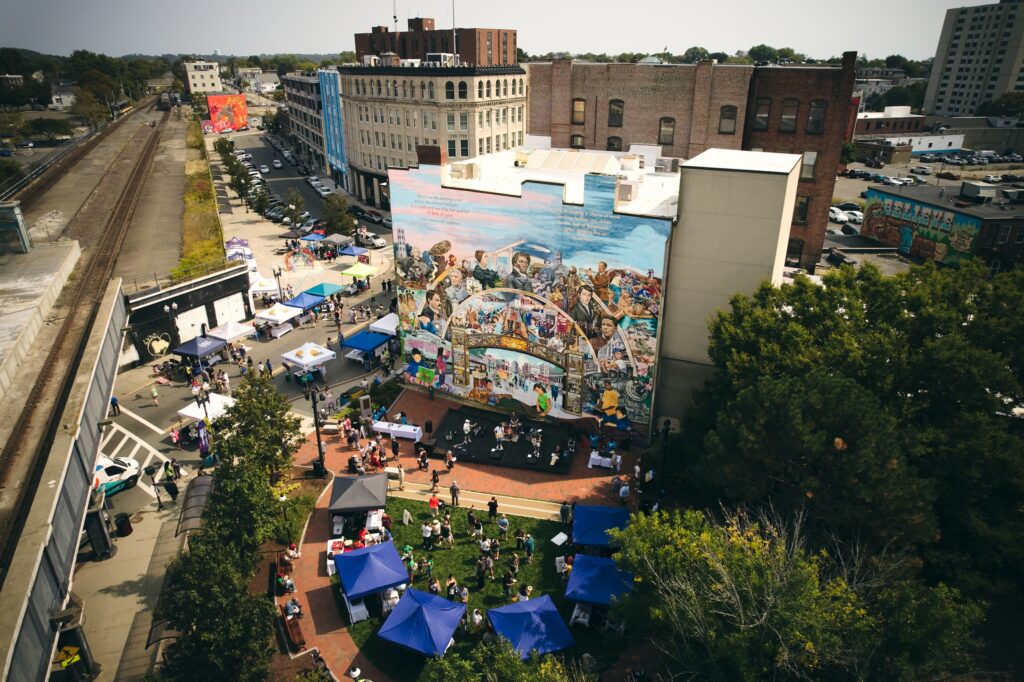
- Massachusetts, Lynn – A grant of $115,000 will support a community-led Climate Resilience Framework in Lynn, Massachusetts that will leverage a climate coalition and resident action cohort to address extreme heat, inland and coastal flooding, and sea level rise. Project partners include Emerald Cities Collaborative, Latino Support Network CDC, and the City of Lynn.
- Michigan, Edison Neighborhood, Kalamazoo – A $115,000 grant will support a scalable neighborhood climate resilience pilot that integrates nature-based stormwater infrastructure with housing rehabilitation to address extreme heat, flooding, and water quality impacts. Project partners include Kalamazoo Climate Crisis Coalition, EcoAdapt, and Kalamazoo County.
- Minnesota, St. Paul (Payne-Phalen neighborhood) – A grant of $115,000 will support the development of a Resilience Playbook that will include a neighborhood-scale project portfolio, and proposal-ready scopes for future public, private, and philanthropic investments that address extreme heat, poor air quality, and severe weather. Project partners include Payne-Phalen Community Council, the City of St. Paul, Environmental Initiative, and WSB.
- Montana, Fort Belknap Indian Reservation – A grant of $110,775 will support stockwater assessments, maintenance systems, and streambank protection plans to address persistent drought, extreme heat, and water quality impacts. Project partners include Lark Environmental, Inc.; Fort Belknap Indian Community (FBIC) Land Department; Aaniiih Nakoda College; and the FBIC Environmental Department.
- Nebraska, The Maya community, Greater North Omaha – A grant of $96,440 will support the development of a community-led climate resilience plan to address extreme heat, flooding, and poor air quality through Maya-led regenerative land practices. Project partners include the Verdis Group, Comunidad Maya Pixan Ixim, The Nature Conservancy, and the Papio-Missouri River Natural Resources District.
- New Mexico, South Valley and International District of Albuquerque – A $115,00 grant will support the development of a program that will offer hands-on community workshops and education to address extreme heat, drought, and flooding through passive rainwater harvesting installations with arid-adapted plants and trees. Project partners include Spatial Informatics Group Natural Assets Laboratory, Ciudad Soil and Water Conservation District, Bernalillo County, and Tree New Mexico.
- New York, Seneca Nation – A grant of $115,000 grant will fund the development of a Climate Adaptation Plan that will address urgent threats of extreme heat, flooding, and shifting ecosystems to Seneca infrastructure, health, and cultural practices. Project partners include The Seneca Nation, VIRGA Tribal Solutions LLC, and Just Collective.
- Oregon, Coos Bay / Coos County – A grant of $115,000 will support an update to the Coos Bay Estuary Management Plan to address coastal hazards, erosion, sea level rise, flooding, and ecosystem shifts. Project partners include Coos County, the Coos Watershed Association, and Sea & Shore Solutions.
- Texas, Alief – A grant of $115,000 will support the development of a community-informed roadmap and tactical demonstration of nature-based solutions that address extreme heat, flooding, and poor air quality. Project partners include AliefVotes, Resilient Cities Network, and the City of Houston.
- Utah, Park City – A grant of $108,000 will support the development of a roadmap for a circular carbon system designed to address the escalating threats of wildfire, drought, and extreme precipitation, producing a comprehensive launch plan for a community-scale biochar system capable of converting local biomass waste into soil-enriching biochar. Project partners are Circular Spring, Park City Municipal Corporation, Summit Land Conservancy, and other community organizations including Utah State University Extension.
- Utah, San Juan County – A grant of $115,000 will support communities in San Juan County, Utah, including Bluff, Blanding, and chapters of the Navajo Nation and Ute Mountain Ute Tribe White Mesa in using locally produced biochar to restore soil health, bridging environmental monitoring tools with traditional ecological knowledge to protect against extreme precipitation and drought. Project partners include Circular Spring, ProgramEarth, and San Juan County.
- Washington, Kalispel Tribal Lands – A $115,000 grant will support the development of a comprehensive Drought, Flood, and Stormwater Vulnerability Assessment that supports the protection of critical infrastructure and natural habitats on Kalispel Tribal Lands. Project partners include the Kalispel Tribe, the University of Washington Climate Impacts Group, and the Kalispel Public Works Advisory Committee.
- Washington, Kitsap Peninsula – A grant of $114,000 will help Coastal Salish tribal communities assess and map potential climate refugia to better understand how drought, extreme heat, and shifting ecosystems are impacting culturally important plants that provide traditional medicines, food, and other natural resources. Project partners include Haven Ecology and Research LLC, Great Peninsula Conservancy, the Port Gamble S’Klallam Tribe, and the Suquamish Tribe.
- Washington, Winthrop – A grant of $110,200 will support the development of a Fire Resiliency Toolkit to address changing seasonality, prolonged drought, and escalating wildfire risk. Project partners include The Keystone Concept, Fire Adapted Methow, and the Town of Winthrop.
Beyond the direct support provided through its grant program, CSCI is committed to helping communities build knowledge, relationships, and long-term capacity needed to navigate a changing climate through regular networking and peer exchange opportunities. Through its cohort support program, project teams have opportunities to learn from experts in the field on topics such as using and communicating climate data, identifying funding and finance opportunities, and evaluating the success of their projects.
Additional resources for both awardees and other communities seeking support include training in the Steps to Resilience framework, access to an Adaptation Help Desk, and insights generated through CSCI’s ongoing learning and innovation efforts. Community leaders and adaptation practitioners can also benefit from the Registry of Adaptation Practitioners, an online directory of qualified experts developed with CSCI. Together, these resources help ensure that communities have access to not only funding, but also to the expertise, partnerships, and shared learning needed to turn climate challenges into sustainable impacts.
CSCI strives to demonstrate what’s possible when communities get the support they need – and the demand far exceeds what current funding can reach. Partners who share this vision are encouraged to connect with us.
- To discuss ways you can help, please contact info@climateresiliencefund.org.
- To learn more about the awarded projects as well as updates on upcoming grant opportunities, please visit www.climatesmartcommunity.com, follow CSCI on LinkedIn, or subscribe to our mailing list.
The CSCI is made possible through the NOAA Cooperative Agreement NA23OAR4310630.